
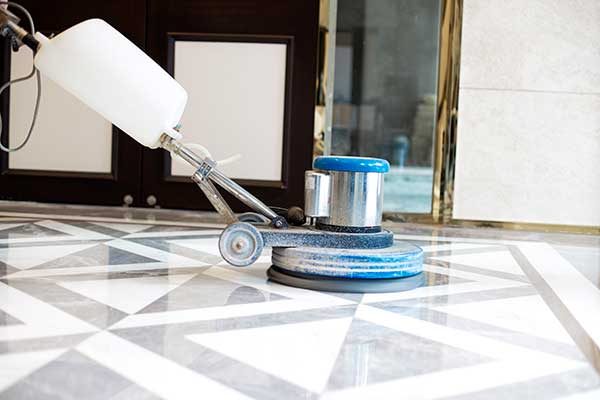
A marble lobby may look evenly polished when viewed from the entrance, yet show a dull track when daylight falls across it from the side. Nova Clean Bristol assesses the stone in the light in which the floor will normally be used. We distinguish local etching, scratches, soil and broad wear before discussing cleaning, honing or polishing. Comparing a small trial with neighbouring tiles helps the owner choose the finish before work extends across the room.
Identify the stone and its finish before treatment
Marble is a natural stone whose appearance depends on the mineral, finish, previous treatment and pattern of wear. A polished floor in a Bristol hotel lobby does not need the same intervention as a honed bathroom vanity or an old stair in a converted townhouse. Nova Clean Bristol begins by discussing the surface, its age, the location of dullness and the result sought. Photographs help identify visible conditions, but a close inspection may be needed to distinguish soiling from etching, scratches, coating failure or structural damage. An inconspicuous test can show how a proposed method affects gloss and colour. We do not assume that a stronger cleaner will restore a damaged finish. An accurate diagnosis protects the stone and makes the quotation useful for the owner, facilities manager or contractor who must decide whether cleaning, honing, polishing or a repair is appropriate.
How marble loses clarity and shine
Foot traffic carries grit that can scratch a polished surface, especially near entrances and lift lobbies. Acidic liquids may etch the finish, leaving pale or dull marks that do not disappear with ordinary washing. Grease, unsuitable coatings and cleaning residues can produce an uneven film. Moisture or salt moving through a floor can create another type of discolouration that should not be polished over without understanding the source. A bathroom counter may show small rings, while a busy commercial floor may have broad traffic lanes. The marks can overlap, so the treatment should be chosen after observing the material in normal and angled light. Some veins and natural colour variations are part of the stone, not defects. We explain which marks may respond to surface treatment and which require another specialist assessment.
Cleaning, honing and polishing serve different purposes
A careful clean removes accessible soil and residues. Honing uses progressively finer abrasives to reduce surface scratches and etching, subject to the thickness and condition of the stone. Polishing develops the desired sheen through a suitable finishing sequence. These are distinct stages, and not every project needs all three. A matt or honed finish should not be made glossy merely because polished marble is familiar. The owner’s intended appearance, adjoining tiles and previous treatment matter. Deep cracks, loose pieces or serious lippage can require stone repair before a cosmetic process is considered. A quotation should specify the finish to be worked towards and any trial area agreed in advance. No responsible technician can guarantee that every vein, stain or historic defect will be erased without examining the slab and the cause of the mark.
A method fitted to the substrate and surrounding materials
On a landing that opens directly onto a different stone or a carpet, agree where the treatment will stop. The centre of a test patch can look satisfactory while its edge catches the light differently from the adjoining finish. For a reception with regular foot traffic, ask the facilities manager to inspect the trial from the entrance and the desk. Include a close view and a wider photograph with a marble restoration enquiry.
The work area may include marble beside timber skirting, metal thresholds, paint, glass or sensitive furniture. We discuss edge protection, access, water control and the equipment appropriate to the floor or fitting. A machine that works on a broad entrance floor may not be suitable for a narrow stair tread or vertical panel. Grout and joints need inspection because a loose edge can be worsened by moisture or mechanical action. Before treatment, identify sealers, waxes or coatings that might affect the response. Product choice should account for stone sensitivity and the specific deposit. Acidic products used casually around marble can make etching worse. A small trial and a staged sequence are especially useful when documentation about the original installation is unavailable.
Marble floors in homes and managed buildings
Residential floors often combine circulation wear with small local spills. Around a kitchen entrance or hall, grit can collect in a route that occupants use every day. In a managed building, a polished lobby may need to remain partly accessible while work proceeds, requiring careful zoning and drying arrangements. We ask about the floor area, furniture, stairs, lift access and whether a maintenance contractor has used a coating or strong detergent. If the finish varies between rooms, a uniform treatment may be inappropriate. The goal can be to improve the visible route while respecting the character of older material. An inspection should also note loose tiles, cracks and damp areas before work is scheduled. Owners can help by providing any installer or maintenance information that identifies the stone and previous treatments.
Stone in bathrooms, kitchens and reception areas
A bathroom vanity is exposed to cosmetics, toiletries and hard water, while a kitchen surface may encounter food acids and grease. Reception counters and stair landings face abrasion from hands, bags or shoes. These different exposures influence the marks that appear and the treatment that may be safe. A splashback with delicate joints may need detailed manual work rather than a floor machine. An installed worktop can have vulnerable edges and sealant lines; moving an appliance or fixture should be agreed with the responsible person. Food preparation surfaces also need appropriate care before they are returned to use. We separate cleaning and polishing from repairs to cracks, failed caulking, loose fittings or a continuing leak. A clear scope explains what will be treated in place and what lies outside a surface restoration visit.
Assessing stains without promising complete removal
A dark mark may come from an oil, a dye, moisture or a material beneath the stone. A pale mark may be etching rather than a stain. Treating all discolouration as surface dirt can lead to unnecessary abrasion and disappointing results. We ask when the mark appeared, what was spilled, whether it has changed and which products have already been applied. Photographs in natural light may help, but testing may still be required. Some stains have penetrated the material or continue to be fed by a moisture source. A stain-specific treatment, if appropriate, can be discussed separately from the polishing of a whole floor. The expected result should be described honestly after the surface has been assessed, with limits recorded for the owner.
Sealing and ongoing maintenance
A sealer may help limit some liquid absorption, but it does not make marble impervious to acid, scratches or neglect. Suitability depends on the stone, finish, prior products and intended use. A coating can change appearance and may be difficult to maintain if applied over residue or moisture. We discuss whether any protective treatment is appropriate only after the surface has been prepared and evaluated. Routine care normally starts with keeping grit away from entry routes, using a method suited to natural stone and wiping spills promptly. Mats should be chosen so that they do not trap moisture or stain the floor. Commercial premises may need a maintenance plan that balances cleaning frequency with the effect of traffic. A restored surface can retain its appearance longer when the owner understands what caused the original wear.
Preparing a property for a stone assessment
Share the address, approximate dimensions, photographs and a description of the stone’s intended finish. Tell us about cracks, loose joints, damp, recent installation and previous polishing or sealing. If furniture covers much of the area, agree what can be moved safely before inspection. Access to electricity and water, parking and working hours can affect the method and schedule. In a busy building, identify who can approve a trial area and when the floor can be taken out of use. Do not apply an unknown descaler to test whether a mark will lift. Protect the area from additional spills while the cause is being established. These practical details help distinguish a straightforward clean from a restoration programme.
Working across Bristol property types
Bristol has historic and modern buildings with stone floors in different conditions. A converted property in Clifton may contain older thresholds and narrow stairs, while a commercial entrance near the city centre may experience continuous foot traffic. Redland, Bedminster and Southville premises can mix original material with later repairs. Filton, Winterbourne, Frampton Cotterell and Pill present other access and building layouts. These locations do not dictate the technique: the material, finish and condition do. Give the postcode and describe the actual surface rather than relying on the word marble alone. If the stone is limestone, travertine, terrazzo or engineered material, tell us what you know so the assessment can be directed appropriately.
Quotations based on condition and access
A price for restoration considers area, finish, wear, edge detail, furniture, access, number of stages and the need for a trial. A small intricate staircase may take more detailed labour than a larger open floor. An old surface with uneven repairs can call for a different approach from newly installed stone with a local mark. The quote should name the areas included, the proposed treatment and the result being sought, while identifying uncertainties that require inspection. If a crack or a damp source becomes visible during preparation, we discuss it before extending work. A fixed price per square metre without reference to condition can be misleading. A good proposal gives the client a clear basis for comparing work and planning when the surface can be used again.
Where the damage is confined to a few tiles, agree the edge of the trial before work starts. The centre of a tile can take a different sheen from the worn strip beside a doorway. View the dry trial from the doorway as well as from directly above it. If the difference catches your eye, the quotation can set out two choices, one for the marked tiles and one for a wider area ending at a threshold. You can judge the cost against what you will actually see when you walk into the room.
When cracked or loose marble needs a stone repair
Polishing is a surface process. It does not stabilise a loose tile, correct substrate movement, repair a leaking pipe or guarantee removal of a stain that has penetrated deeply. A fractured slab, unsuitable previous coating or structural defect may require another trade. Heavy grinding can alter levels and is not automatically justified by a request for extra shine. We evaluate the achievable improvement in relation to the stone’s thickness, condition and setting. If a finish cannot be made uniform without unacceptable risk, that limitation should be stated in the proposal or after the trial. The purpose is to preserve usable material and communicate a realistic outcome, not to promise that an older floor will resemble a newly installed slab in every light.
Handover and care after treatment
At completion, the owner or facilities representative should inspect the agreed areas in the light normally used in the space. The record can identify the finish achieved, visible limitations, any treated stains and areas left untouched. Follow the recommended time before placing furniture, mats or heavy traffic back on a surface when a treatment needs to settle or dry. Keep care information available to cleaners who maintain the property later; an incompatible product can quickly dull a restored finish. For a commercial entrance, agree where signs or barriers remain during the return to service. A documented handover helps distinguish the restoration from subsequent wear and supports sensible maintenance.
Discuss marble polishing in Greater Bristol
Send photographs of the overall surface and close views of the marks, together with the postcode, approximate area and the desired finish. Explain where the stone is installed, whether the building is occupied and what products or treatments have been used. Call 0845 52 805 20 or email