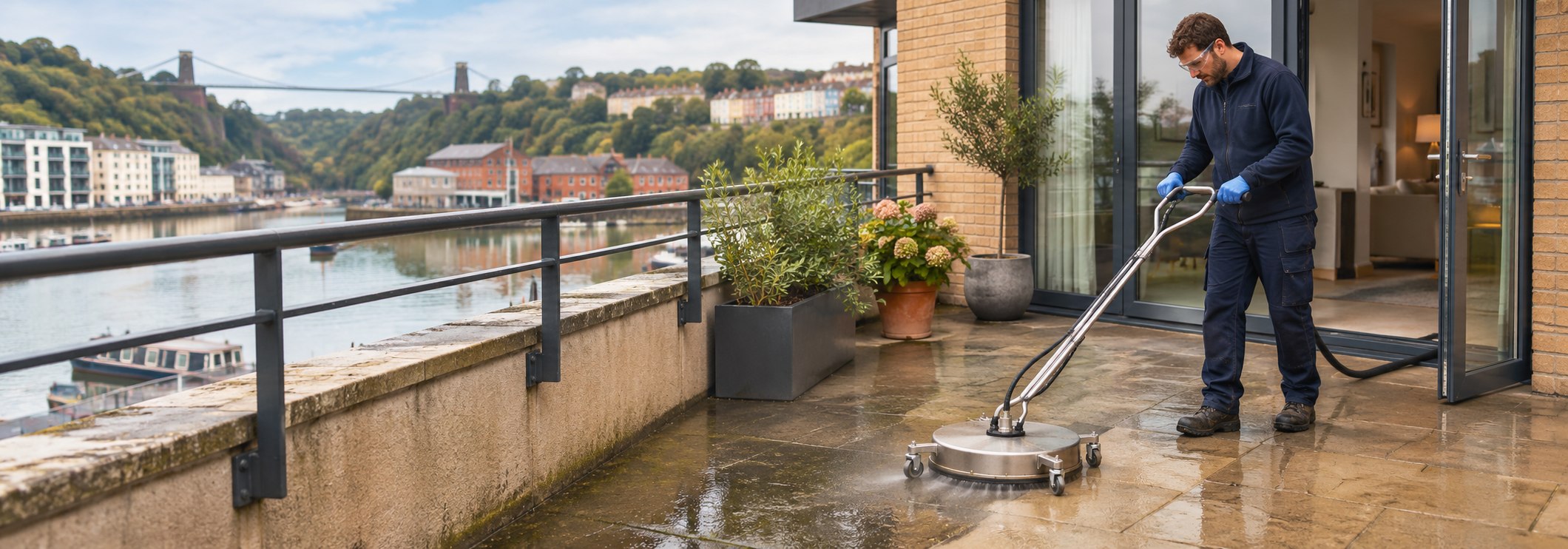
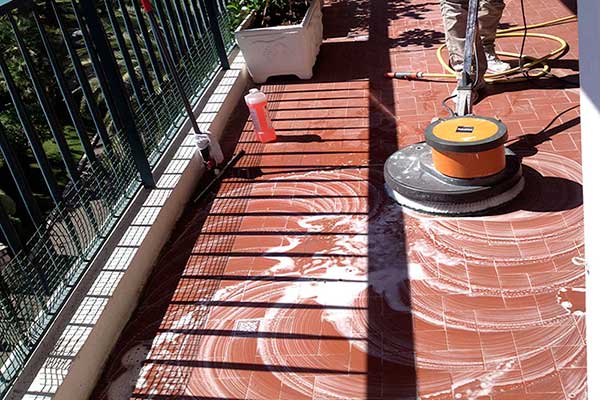
A tiled balcony over a neighbour’s patio needs a different cleaning plan from a ground-level stone terrace with an outside tap. On a Bristol apartment block, the route for equipment through the building and the destination of wash water can matter as much as the floor finish. Tell Nova Clean the level, approximate area, surface and any house rules. We can then agree which parts of the deck, thresholds and railings are included and where a trial area would be useful.
Start with the surface, not the pressure setting
A balcony or terrace can be made from concrete, porcelain, natural stone, timber, composite decking, painted metal or a waterproof membrane. The same cleaning method does not suit every material. Nova Clean Bristol asks about the surface, its finish, drainage and the type of deposit before proposing work. Moss, algae, atmospheric dirt, cooking grease and bird fouling present different problems. A high-pressure jet can open joints, lift coatings or drive water beneath a vulnerable threshold, so it should never be treated as the automatic answer. Photographs help with an initial discussion, while a trial area may be sensible where a finish is uncertain. The aim is to improve safe use and appearance without damaging the waterproofing or sending dirty water into a neighbouring property.
Assess access, levels and drainage
Outdoor cleaning needs a plan for where people, equipment and runoff can go. A ground-level patio with a nearby drain differs from a fifth-floor balcony over another resident’s window. We ask about lift access, carrying distances, water and electricity, railing height, loose furniture and the route to the working area. Drain outlets can be blocked by leaves and grit; clearing visible debris before washing may prevent a new overflow. Do not assume a terrace drain can accept concentrated cleaning solution or large volumes of silt. In a managed block, the freeholder or building manager may set rules for water use and working hours. The owner should identify any known leak or defective membrane before a cleaning appointment. A safe, practical assessment can avoid an intervention that creates more problems than it solves.
Balconies in flats and shared buildings
Photograph the threshold and the outlet as well as the main floor if both are safely visible from inside the balcony. Those views help distinguish a surface-cleaning request from a blocked outlet that needs building maintenance. A streak on the wall below the balcony may belong to the shared exterior. Ask the managing agent whether that area should be assessed separately for façade cleaning before it is included in the quotation.
Bristol has many converted houses and apartment blocks where a balcony is close to neighbours and public routes. Splash, overspray and falling debris require control. We discuss whether the space can be isolated, whether adjoining doors and vents should be protected and whether access to the flat is needed. A balcony may contain planters, furniture, storage boxes and fragile fixtures that the owner must move or authorise us to handle. If there is nesting material or heavy bird fouling, that needs a separate assessment before ordinary terrace cleaning. A written brief should distinguish the floor, railings, accessible walls and glazing. The building manager may need notice of a visit and may prohibit some methods. Confirm these conditions early so the proposed clean fits the site rather than relying on assumptions about an outdoor area.
Patios, paving and garden terraces
Ground-level terraces can carry soil from planting beds, algae in shaded corners, organic staining and grime from frequent use. The substrate and joints matter as much as the visible deposit. Sand-filled paving can lose joint material under excessive force, while stone may react badly to acidic cleaners. Timber decking can be marked or splintered by an aggressive jet. A small test can help establish the appropriate method and realistic result. We ask about drainage into lawns, beds and neighbouring areas, and about any protective sealer previously applied. Move fragile planters and electrical items before work if possible. Repairs to loose paving, trip hazards or poor drainage should be considered separately from cleaning. An attractive finish is useful only if the surface and surrounding property remain sound.
Cleaning natural stone and sensitive paving
Limestone, sandstone, slate and other natural materials have different porosity and finishes. Some may be etched by unsuitable acids or marked by metal tools. A surface may also have an older sealer that has worn unevenly. We discuss the stone type where known, look for loose joints and consider how a cleaning product could affect adjacent brick or planting. A measured approach can include dry removal, controlled application and careful rinsing, with a trial area where needed. Dark patches may be moisture or mineral staining rather than removable dirt. A broken edge or flaking surface should not be hidden by a promise of total restoration. If sealing or repair is wanted, it should be assessed as a distinct task after the surface condition has been established.
Timber and composite decking
Decking can become slippery when organic films collect in grooves and shaded areas. Cleaning should be gentle enough to avoid damaging wood fibres, fasteners or a manufacturer’s composite finish. We ask whether boards are loose, rotten or recently treated and whether water can drain beneath them. A damaged board may need replacement before the area is used normally. Mechanical agitation, product choice and water volume should reflect the material. High pressure held too close can leave permanent lines, while unsuitable chemistry can alter colour. The owner should share any care instructions and explain whether a coating or oil is planned after cleaning. Drying time matters before furniture is returned or a new finish is applied. A clear scope separates cleaning from sanding, repairs and re-oiling.
Railings, glass and exterior furniture
A balcony clean may include floor panels, handrails, reachable glazing, door tracks and furniture, but these should be listed rather than assumed. Powder-coated metal can be damaged by abrasive pads, and older paint may already be flaking. Glass can have mineral deposits or scratches that ordinary washing will not remove. Upholstered outdoor furniture needs a separate fibre and drying assessment. We ask which items may be moved and where they can be stored during the work. If planters have left rings on the surface, the cause and substrate need consideration. Cleaning around an electrical socket or lighting fixture should avoid introducing water where it does not belong. A room-by-room style checklist is just as useful outside when several materials sit within one small terrace.
Bird fouling requires its own controls
A few marks from birds may be manageable within an ordinary outdoor clean, but accumulated droppings and nesting debris need careful assessment. Dry deposits can create dust when disturbed, and material may collect around drainage and ledges. Do not sweep a heavily fouled area into a shared courtyard or wash it over a neighbour’s balcony. Tell us the extent of the problem, access height and whether birds are still nesting. Our pigeon droppings cleaning guide discusses controlled removal and the distinction between cleaning and prevention. Addressing the source of repeated fouling may require separate bird management measures. A balcony should be returned to use only when the agreed work and appropriate inspection are complete.
What a cleaning visit can and cannot change
Cleaning can remove accessible soil and some surface growth, but it cannot repair a failed waterproof membrane, cracked tiles, unstable railing or persistent water ingress. Some dark marks are embedded in porous material, and sunlight may have changed the colour of a coating. We explain these limitations before work wherever they can be identified. If rinsing reveals a defect or a leak becomes apparent, the area may need to be paused for assessment by an appropriate trade. A glossy appearance is not proof that a terrace is structurally sound or watertight. Clients should describe any known leak to a lower flat before a method is chosen. Protecting the building is more important than applying a forceful treatment to achieve a quick visual change.
Timing around weather and use
Outdoor work depends on weather, temperature and the time a surface has to dry. Wind can spread spray; heavy rain can wash products away or make an area unsafe. In winter, low temperatures and poor daylight may reduce the useful working window. A commercial terrace may need to reopen for customers, while a residential balcony may be used by occupants immediately afterwards. We discuss the intended use and any event deadline without promising a fixed drying time for every material. Planting, furniture and neighbouring openings should be considered before the visit. If a protective treatment is planned later, the substrate may need additional drying. A realistic schedule can include an inspection before the area returns to full use.
Planning work across Greater Bristol
A city-centre apartment may require a booked lift and access through a managed reception. Clifton and Redland properties can have older balconies and sensitive finishes. Bedminster and Southville have varied courtyard and roof-terrace layouts, while Filton, Winterbourne, Frampton Cotterell and Pill present other residential and commercial settings. These are logistical prompts, not assumptions about a particular address. Tell us the postcode, floor level, drainage, water source and whether the area can be reached without crossing occupied rooms. If a terrace is above another property, mention this at the start. A local plan should follow the actual building, the material and the people nearby.
How floor level and drainage affect a balcony cleaning quote
A useful estimate considers area, surface type, deposit, number of levels, access, water supply, drainage and protection of adjoining property. A small elevated balcony with heavy contamination can demand more care than a larger open patio. List railings, glazing, furniture or planters if you want them included. Photographs of the whole area and close views of problem spots can help, provided they can be taken safely. We may need an inspection before confirming a method on a sensitive or leaking surface. The quote should explain inclusions, exclusions and any condition that depends on a trial. It should distinguish cleaning from repairs and specialist bird-fouling removal. A simple price per square metre rarely describes those differences.
Some Bristol flats have paving slabs laid on pedestals. Rain disappears between the joints and drains at a lower level, so an apparently clear surface tells you little about the outlet beneath it. If your building has this arrangement, say whether the caretaker can identify an inspection point. A quotation can then distinguish washing the exposed slabs from lifting paving or investigating standing water. If water has already shown through the ceiling below, tell the building manager before arranging a wash.
Prepare the area and neighbours
Remove or secure personal belongings, cushions, electrical items and fragile plants. Tell us which fixtures must remain and whether a neighbour or building manager needs notice. Check for known drainage blockages and share any previous product or sealer information. Do not stand on an unsafe railing or roof edge to take photographs. If the area contains loose tiles, damaged boards or a suspected leak, describe them before booking. In a shared building, identify where equipment may be placed and how dirty water must be controlled. These steps make the visit safer and protect the surrounding property.
A useful handover after outdoor cleaning
Inspect the agreed floor area, edges, railings and other included surfaces once the area can be accessed safely. Note any permanent marks, worn coatings or repairs that remain. If a surface needs drying before furniture is replaced, agree that with the owner. A building manager may want a record of runoff controls or an inspection of the shared route. The work should be described in terms of the actual cleaned areas, not as a guarantee against future algae or bird activity. Ongoing maintenance can include keeping drainage clear and addressing the shade or source that allows deposits to return. A clear handover helps distinguish cleaning from the building’s longer-term maintenance needs.
Discuss your balcony or terrace in Bristol
Send the postcode, approximate area, surface material, floor level, photographs if safe and the main deposits you want addressed. Mention drainage problems, neighbours below and any management rules. Call 0845 52 805 20 or email