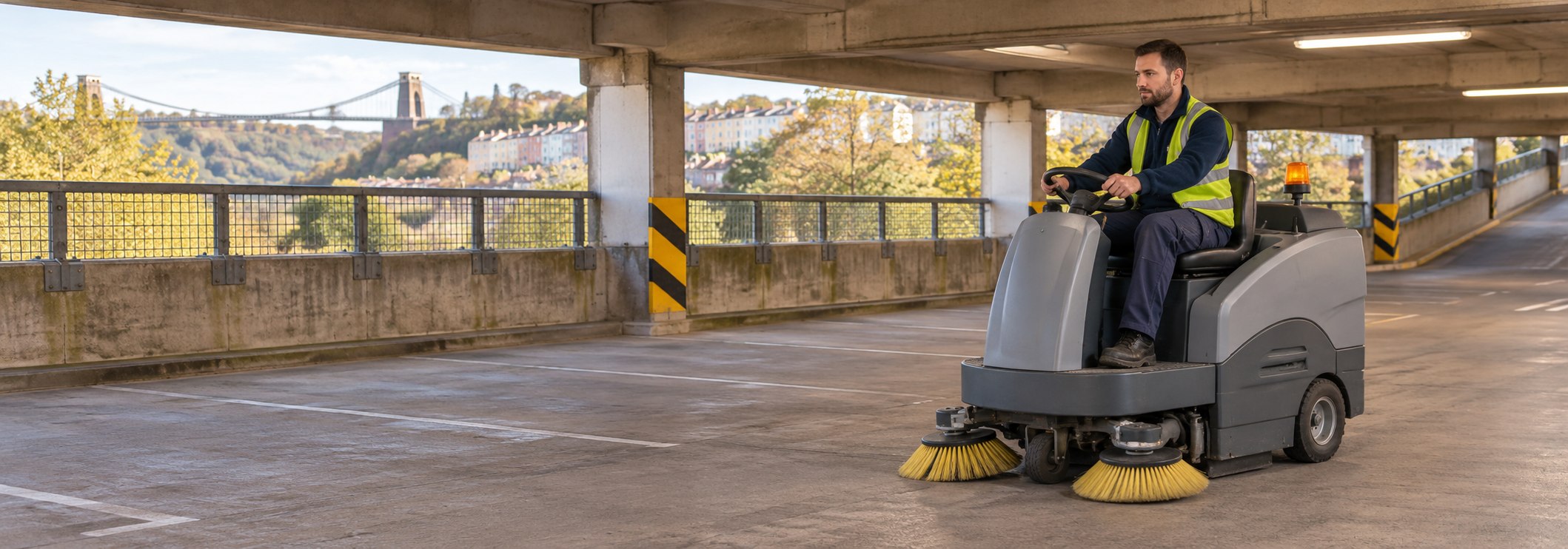

Before quoting for a Bristol car park, we need to know whether the cleaning machine can reach every level and which bays must stay open. A height barrier, a tight turn onto a ramp or one pedestrian door serving several blocks can set the order of work more accurately than a count of spaces. Nova Clean Bristol plans sweeping, local treatment of deposits and floor cleaning with the facilities manager so that each section can be inspected and reopened in sequence.
A car park clean begins with how the area operates
A residential basement, retail parking deck and open surface car park have different traffic patterns, drainage and safety controls. Nova Clean Bristol asks who manages the area, when vehicles can be moved, which bays and circulation routes are included and what contaminants are present. A useful cleaning plan should fit the hours when the site can be closed or zoned. It may involve machine sweeping, controlled wet cleaning or local treatment of a deposit, depending on the surface and the permitted runoff route. We do not assume that every stain can be removed with a pressure washer. The manager should identify any defects, charging equipment, vulnerable joints or signs that require protection. A written scope helps occupants and visitors understand which areas will be inaccessible and when the car park can safely reopen.
Survey the surface and existing defects
Car parks can be made from concrete, asphalt, resin coatings, painted decks or block paving. A treatment suitable for one may lift or mark another. We look for loose paint, crumbling joints, ponding, cracks, exposed reinforcement and old repairs before choosing a method. If the surface is a suspended deck, water management is especially important because leakage can affect the area below. A recent coating may have care instructions or a curing period. Tyre marks, dirt, moss and oil have different causes; a stain may have penetrated a porous substrate. Photographs of both the whole site and local problems can help at the enquiry stage, but an on-site survey may be needed for large or complex areas. Cleaning is not a substitute for a structural or drainage assessment when defects are visible.
Plan traffic exclusion and pedestrian routes
Machinery and wet surfaces should be separated from moving vehicles and pedestrians. The site manager should decide which bays can be emptied, how drivers will be directed and who will place or approve barriers and notices. In a multi-storey car park, lifts, ramps and emergency exits must remain appropriately managed. A partial closure may allow cleaning in zones, but it can also lengthen the programme. Access to water, power, a safe loading area and a route for equipment all affect the schedule. If a retail site stays open, discuss peak periods and the time required for drying. Security staff or a facilities team may need to coordinate keys and alarms. The specification should describe who controls each area rather than assume that the cleaner can close it unilaterally.
Sweeping and dry removal before washing
Loose litter, leaves, grit and dust should be addressed before wet treatment where practical. Otherwise, water can move debris into drains, corners and adjoining bays. Mechanical sweeping or appropriate vacuuming may be useful for a large open area, while tight edges and service points can require manual attention. We ask whether waste bins, abandoned goods or stored materials are present; their removal should be authorised and scoped separately. A heavy build-up of silt can signal drainage problems. It is more efficient to identify those issues first than to wash dirt repeatedly across the same deck. The initial pass also makes the substrate easier to inspect for stains and damage before stronger treatment is considered. A staged method can reduce the amount of water and labour needed for the final clean.
Oil, fuel and vehicle-related deposits
Vehicle fluids can leave visible marks and create a slip concern. The age, volume and surface porosity affect how a deposit responds. Fresh spills may need containment and a suitable response before ordinary cleaning is scheduled. An old oil stain absorbed into concrete may remain visible after surface soil is removed. We ask what is known about the substance and whether there is an active leak from a vehicle or equipment. Do not mix unknown chemicals or wash a suspected hazardous spill into drainage. A facility manager should arrange the appropriate response for substantial or unidentified contamination. Where local treatment is suitable, the proposal should state the area and expected limits rather than imply that every mark will disappear. The source should be addressed to prevent immediate recurrence.
Drainage and responsible water control
Water from a car park can carry grit, oil and cleaning residues. The available drainage route matters before a wet method is selected. Some sites have interceptors, some drain to a controlled system and others have sensitive outlets or neighbouring land. The manager should provide drainage plans or restrictions where available. We consider water volume, capture or containment and where collected material can be taken. A blocked drain should be addressed before washing a large area, and a leak through a deck requires assessment by a competent trade. The cleaning quotation should distinguish ordinary floor treatment from drain repairs or specialist waste handling. This protects the building and helps the responsible person understand what will happen to the residue rather than judging the work only by the appearance of the surface.
Ramps, corners and pedestrian approaches
A car park includes more than parking bays. Ramps can carry tyre deposits, stair approaches may gather litter, and sheltered corners can retain dust or organic growth. These areas can also be more difficult to isolate safely. Agree whether the quote covers ramps, pedestrian walkways, lift lobbies, kerbs, wall bases, payment areas and accessible drainage grilles. A painted line or directional marking may be worn rather than dirty; cleaning will not restore missing paint. Working near an electrical payment machine or charger calls for separate precautions and limits. Some corners may need manual detail after a machine pass. Listing these components prevents a site manager from expecting an unquoted full-facility clean when the original request covered only the deck.
Underground and multi-storey parking
Include the lowest marked clearance on the route to the work area when you request a car park quotation. A loading entrance may admit a vehicle that cannot pass a lower beam on the next level. Mark occupied accessible bays and any door residents still need during the closure. If contractors are leaving the building at the same time, agree whether construction dust in the shared lobby belongs in the after builders cleaning brief.
Enclosed areas bring ventilation, lighting and access questions that an outdoor deck may not have. We ask about ceiling height for machinery, exhaust control, alarm systems, fire doors and where wet floors can dry. A basement may have pumps or vulnerable service rooms that should not receive runoff. The facilities team should identify electrical installations and any areas that must remain open for residents or emergency access. A multi-storey layout may require work on different levels at separate times, with a clear route for drivers. No cleaning crew should be asked to proceed when the site is unsafe or a required system has been isolated without agreement. The practical programme depends on the building’s controls as well as its square metres.
Outdoor car parks and weather
An open car park may collect leaves, mud, bird fouling and algae near landscaped edges. Weather affects both the cleaning and the time before traffic returns. Wind can scatter loose debris; heavy rain can complicate containment of a product or move deposits into drains. In colder conditions, wet surfaces can become hazardous. We plan a suitable window with the site manager and discuss whether adjacent businesses or residents need notice. A pressure treatment that spreads debris into planting or a public footpath is not a good solution. Where tree cover or drainage causes rapid re-soiling, maintenance may need to address the source as well as the current surface condition. A clean improves the accessible area but cannot guarantee that outdoor deposits will not return.
Managed sites and commercial responsibilities
A landlord, managing agent, retail operator or facilities contractor may each control different parts of a car park. Confirm who can approve closure, water use and waste handling. If tenants have allocated bays, give appropriate notice before expecting vehicles to move. A risk assessment or method statement may be needed under the site’s own procedures; raise that requirement at the quotation stage. We can agree an inspection and handover representative so questions about inaccessible bays or new spills are resolved promptly. Security cameras, barrier gates and pay stations should be identified and protected. Cleaning is a service within the management plan, not a replacement for traffic enforcement, structural maintenance or repairs to a defective coating.
Bristol locations and access constraints
Car parks near central Bristol, the Floating Harbour and busy shopping streets may have restricted loading or high pedestrian activity. A residential block in Clifton or Redland may offer only a short closure window, while a business premises in Filton can have shift patterns that affect availability. Bedminster, Southville, Winterbourne, Frampton Cotterell and Pill present other combinations of site layout and access. These are examples of logistical differences, not assumptions about the condition of any one car park. Share the postcode, number of levels, surface type, access height, working hours and who controls the gates. A site plan or marked photograph can help define the zones to be cleaned. Travel and equipment arrangements should be included before a date is confirmed.
How bay closures and machine access affect car park cleaning costs
Area matters, but so do the deposit, surface, number of levels, vehicle exclusion, drainage control, edge detail and time available. A small basement with many pillars and oil marks can take more careful work than a large unobstructed deck. We ask whether bays will be empty, whether water and power are available and whether a single phase or a zoned programme is required. The quote should specify sweeping, washing, local stain treatment and any separate waste assumptions. If a trial area is needed on a coating, that condition should be stated. A universal price per bay can be misleading when materials and contamination differ. A clear scope gives the manager a useful basis for comparing proposals and inspecting the result.
Limits of cleaning and additional work
Cleaning can remove recoverable dirt and some deposits. It cannot repair potholes, restore worn line markings, resolve a failing drainage system or certify a structural deck. Old oil may have penetrated deeply, and weathered coatings can remain patchy after the surface soil is removed. We discuss visible limitations and pause if unexpected damage makes a proposed method unsuitable. A persistent source of spills or leaking vehicle can quickly undo an otherwise effective clean. The responsible party may need a surfacing, drainage, electrical or hazardous-spill specialist before or after the cleaning. Separating these tasks keeps expectations realistic and helps avoid damage to the asset.
Handover and a maintenance rhythm
The site manager should inspect the agreed zones once barriers can be removed and surfaces are safe for traffic. Note bays that remained occupied, local staining that did not respond and defects that need another contractor. Photographs or a marked plan can help where the facility has several levels. A maintenance plan may include periodic sweeping and local response to new spills, with deeper cleaning scheduled around occupancy. There is no single interval for every car park: traffic, shelter, nearby trees, drainage and use all affect the rate of soiling. A clear record of what was cleaned supports future planning without promising a permanently stain-free deck.
Discuss a car park clean in Greater Bristol
Send the postcode, approximate area, number of levels, surface type, photographs if safe and the main deposits. Explain vehicle access, closure windows, drainage restrictions and whether the facility has a manager or security team. Call 0845 52 805 20 or email