
Roof cleaning in Bristol and nearby towns
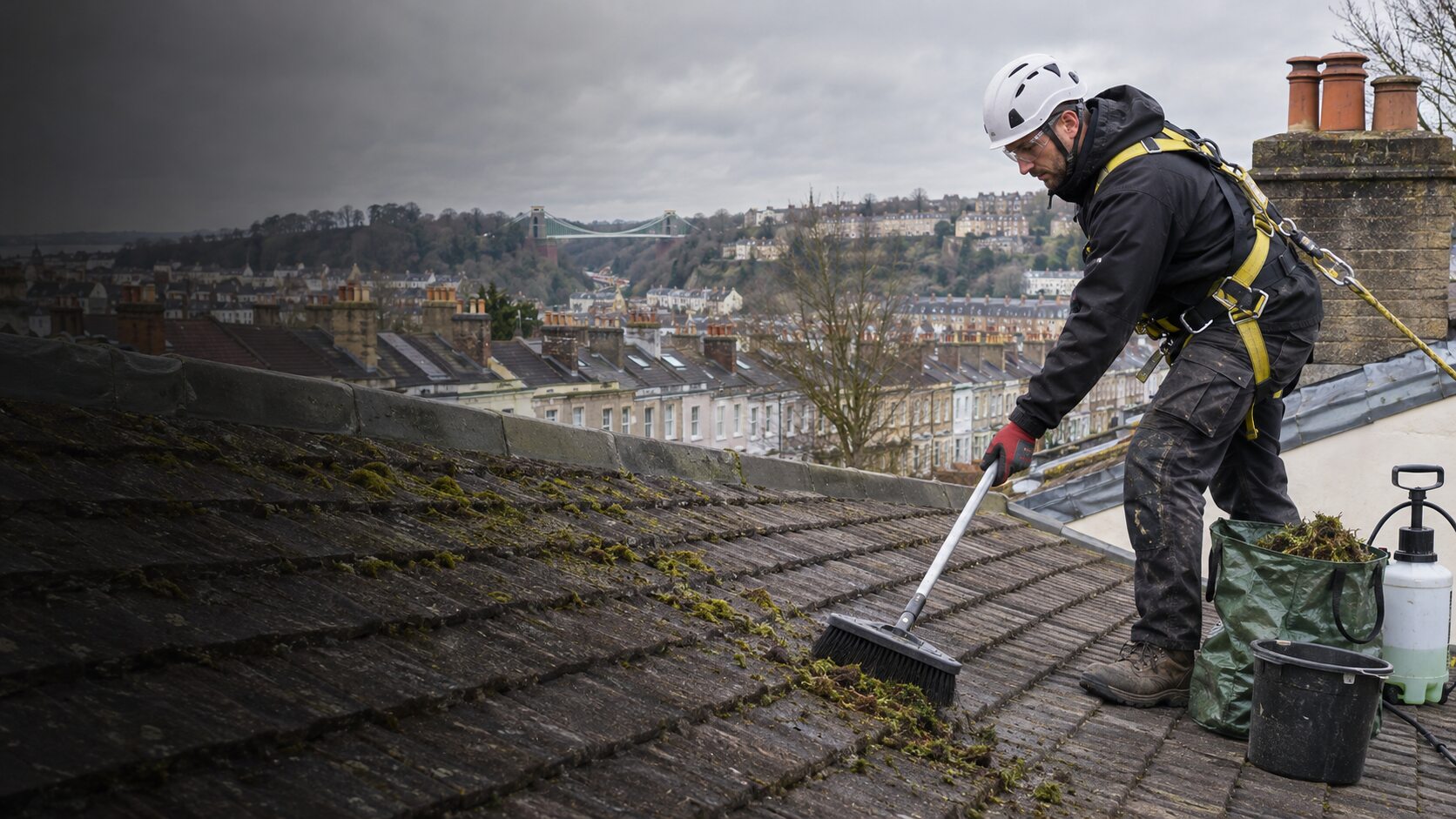
Moss reaching a gutter is often what prompts a Bristol owner to enquire about roof cleaning. The first assessment looks beyond the moss. A slate slope above a narrow side passage, a tiled extension behind a terrace and a commercial roof with rooflights each need a different access plan. Ground-level photographs and details of past repairs help Nova Clean decide what needs inspecting, where debris could fall and whether a roofer should assess an existing defect before cleaning is arranged.
Inspect access and fragile materials
We ask for the roof type, approximate pitch and height, age, photographs, roof lights, solar arrays and available space for safe access equipment. Weather and nearby pavements or gardens influence timing. Fragile coverings, asbestos-containing materials or uncertain structural conditions require specialist assessment and may rule out ordinary cleaning. No one should climb onto a roof solely to provide a quick visual estimate when safe access has not been established.
Choose a controlled method for the covering
Excessive pressure can dislodge tiles, drive water beneath laps or damage protective finishes. Mechanical removal also needs care around fixings, valleys and gutters. We discuss the likely method, where debris will collect and how gutters and downpipes will be protected. Any proposed treatment must suit the covering and its surrounding surfaces. Staining may remain after deposits are removed; cleaning cannot restore a roof that has already weathered or repair an underlying defect.
Terraces, homes and commercial roofs
A Victorian terrace in Redland can involve a different access plan from a detached home in Winterbourne or a large commercial roof near Filton. Shared boundaries, parked vehicles, public footways and plant equipment must be considered. We may recommend a staged inspection or a separate roofer when the covering needs repairs. An estimate should state the accessible areas, proposed technique, handling of debris, necessary access arrangements and work excluded from the cleaning.
Tell us about any leaks, loose tiles and planned building work when requesting a quotation. Send photographs from a safe vantage point, rather than climbing onto the roof. Call 0845 52 805 20 or email
Start with the purpose of the work
Some owners want to remove heavy moss from tiles, while others are concerned about blocked valleys, a stained elevation below the roof or the appearance of a property before a handover. These are different objectives. We ask what the owner has noticed and whether a roofer has reported defects. If water is entering the building, cleaning should not be treated as a repair. A leak needs investigation by a suitable professional. If the issue is mainly appearance, a small test or close assessment can help set expectations about the amount of staining that may remain after deposits are removed.
A roof can look similar from the street while differing greatly in construction. Clay tile, concrete tile, slate, metal sheet and modern membrane have different tolerances. Older coverings may be weathered, coated or loose. We ask when the roof was last inspected, whether any repairs are planned and whether gutters or solar panels are present. Photographs taken safely from the ground or an existing upper window are useful. There is no reason for an owner to climb onto a roof to prepare an enquiry.
Safe access is part of the method, not an afterthought
Work at height needs a planned approach. A ladder may give access to one point but does not by itself provide a suitable working position across an elevation. Roof lights and other fragile surfaces may be difficult to distinguish from robust areas. We consider height, pitch, edge conditions, ground space and the route to the work. A commercial roof near Filton can involve plant, parapets and fragile sheets; a domestic roof in Bedminster may sit above a narrow pavement or extension. The available access can determine whether cleaning is practicable at all.
Where a scaffold, platform or specialist access contractor is needed, that requirement should be included in the proposal or clearly identified as an additional arrangement. Weather can also alter the plan. Wind, rain, ice or intense heat can make a method unsuitable or affect drying and runoff. We would rather agree a sensible postponement than force work onto a roof under poor conditions. The people who use the area below may need notice and a controlled exclusion zone while debris is removed.
Assess moss and biological growth without damaging the covering
Moss can collect in laps, around ridges and beside gutters. Its presence does not automatically mean a roof is failing, and removing it does not guarantee that it will never return. The amount, roof condition and surrounding vegetation help determine whether cleaning is useful. Mechanical removal must avoid lifting or breaking coverings. High pressure can drive water under tiles or affect coatings, so the proposed technique should be matched to the roof rather than selected for speed alone. A trial can reveal how the surface responds.
Debris should be considered before it falls. Material removed from a slope may collect in a gutter, on a lower roof or in a neighbour's garden. We ask where it can be captured and how it will be taken away. Downpipes and drains may need protection. If a gutter is already damaged or blocked, maintenance may be required separately. The owner should know whether gutter clearance is part of the quotation and whether it can be done using the same safe access arrangement.
Care for joints, flashings and nearby equipment
If the rear slope carries solar panels, include a photograph from the garden if one is available and ask which surfaces the quotation covers. The roof covering beneath an array may be inaccessible. Cleaning the exposed tiles and cleaning the panel glass are separate tasks, each with its own access and care requirements. Ground-level observations are enough for an initial enquiry. The contractor should assess any work at height.
Ridges, valleys, flashings, vents and roof-mounted units create details that deserve attention. Aggressive contact around a flashing can disturb a seal; excess water near a vent can enter the building. Solar arrays have electrical components and manufacturer-specific maintenance guidance. We identify such features before work begins and may exclude an area that cannot be treated safely. Cleaning is not an inspection of electrical performance, a repair of roofing details or a substitute for a competent survey of the covering.
If contractors are already scheduled to replace tiles, repair flashing or install panels, coordinate the order of work. Cleaning immediately before dusty repairs can waste effort; cleaning after repairs may need care around new materials. We can discuss a sequence with the owner and describe what is included. A roof with suspected asbestos-containing materials should not be treated as an ordinary cleaning job. Its identity and appropriate management need specialist assessment before any disturbance.
Runoff, surroundings and the limits of products
Water leaving a roof can carry organic debris and residues into gutters, gardens or drainage systems. We discuss the likely route, nearby planting and adjoining surfaces. Products should be selected only after the covering and surrounding materials have been considered. The owner should know if a treatment is proposed, what area it covers and what result is realistic. A chemical treatment does not repair damaged tiles or solve a moisture issue elsewhere in the building. We do not use a generic promise of permanent protection.
Cleaning can reveal colour variation that was hidden by uniform deposits. Old tiles may show weathering, previous repairs or different batches. A newly cleaned area can therefore look uneven for reasons unrelated to the quality of cleaning. We discuss these possibilities before the work and can record the condition in photographs. If an owner seeks a uniform new appearance, replacement or other building work may be a separate decision. It would be misleading to imply that washing alone can reverse decades of weathering.
Domestic roofs across Bristol and nearby towns
Clifton and Redland have older properties with varied roof forms, neighbouring buildings and access constraints. A terrace in St George may have a rear extension that prevents straightforward access. A detached home in Frampton Cotterell or Winterbourne can have more ground space yet a steep pitch, conservatory or landscaped garden beneath the work. Pill properties may have exposed elevations and different parking arrangements. We use the specific address, rather than a generic Bristol label, to ask about logistics.
For a homeowner, the first practical step is to describe the covering and the reason for cleaning. Send photographs taken safely and tell us about leaks, previous repairs, roof windows, aerials and panels. A rough roof area can help, but uncertain measurements are acceptable. We can say whether an inspection appears necessary and what access information is missing. If the roof condition raises concerns, we may recommend a roofing professional before discussing cleaning.
Commercial and shared buildings
A commercial roof may contain air-handling equipment, cable runs and routes used by maintenance staff. The building manager should identify who authorises entry, whether permits or induction are required and what operations must continue. A flat roof can have fragile lights, membranes and outlets that need protection. In a shared residential block, the managing agent may need to inform occupiers and coordinate access through a common area. The cleaning proposal should not assume that a contractor can arrive and immediately start at roof level.
Large areas may need to be divided into phases. This can allow inspection of a test section, review of debris handling and adjustment of the method before the rest is treated. A proposal should identify what is accessible, where work starts, how the result will be checked and what happens if hidden deterioration is discovered. The price may need to distinguish cleaning from access hire, drainage maintenance and repairs. This transparency is useful for a facilities manager comparing proposals and for residents who will be affected by the work.
What a roof cleaning estimate should cover
Look for the roof type and approximate area, the access assumption, the proposed removal method, handling of moss and debris, and any treatment included. Ask whether gutters, downpipes, dormers, solar panels and lower roofs are covered. The quotation should mention restrictions such as fragile areas, loose tiles or weather dependence. If an inspection is required before a fixed price, that should be stated. Avoid relying on a broad phrase such as complete roof restoration when the actual work is cleaning.
Photographs before and after can help document accessible areas, but they do not prove that every hidden detail is sound. The client should have a chance to discuss remaining marks, areas omitted for safety and any damage noticed during the work. Where a roof needs repairs, the cleaner can record an observation without diagnosing every cause. The owner can then appoint the appropriate specialist. Keeping these responsibilities clear makes the work more useful and prevents a cleaning invoice being mistaken for a roofing warranty.
Planning the next steps
When you enquire, provide the property address, safe photographs, roof material if known, approximate height, access points and the main problem you want addressed. Mention occupiers, neighbours, public footways and any planned repairs. We discuss Greater Bristol, including Filton, Frampton Cotterell, Winterbourne and Pill, and will explain whether a closer assessment is needed. The right answer may be a carefully defined clean, a staged approach or a repair assessment first.
Call 0845 52 805 20 or email
Questions after a first inspection
If an initial assessment identifies several materials, ask whether they need separate methods. A tiled main roof and a flat extension should not automatically receive the same treatment. If a conservatory, terrace or garden lies below, ask how it will be protected and how debris will be collected. Confirm who will move vehicles or outdoor furniture and whether a water supply is required. These details can affect timing and cost, yet they are easy to overlook when discussing only the visible moss.
It is also useful to agree the point at which work would pause. A loose ridge, unexpected fragile area or concealed leak can change the safe method. The contractor should explain the finding and seek an agreed decision before continuing beyond the stated scope. The owner can then decide whether to arrange a roofer, revise the cleaning area or defer the work. A clear pause point is preferable to discovering afterwards that an unsuitable method was used to meet a fixed schedule.