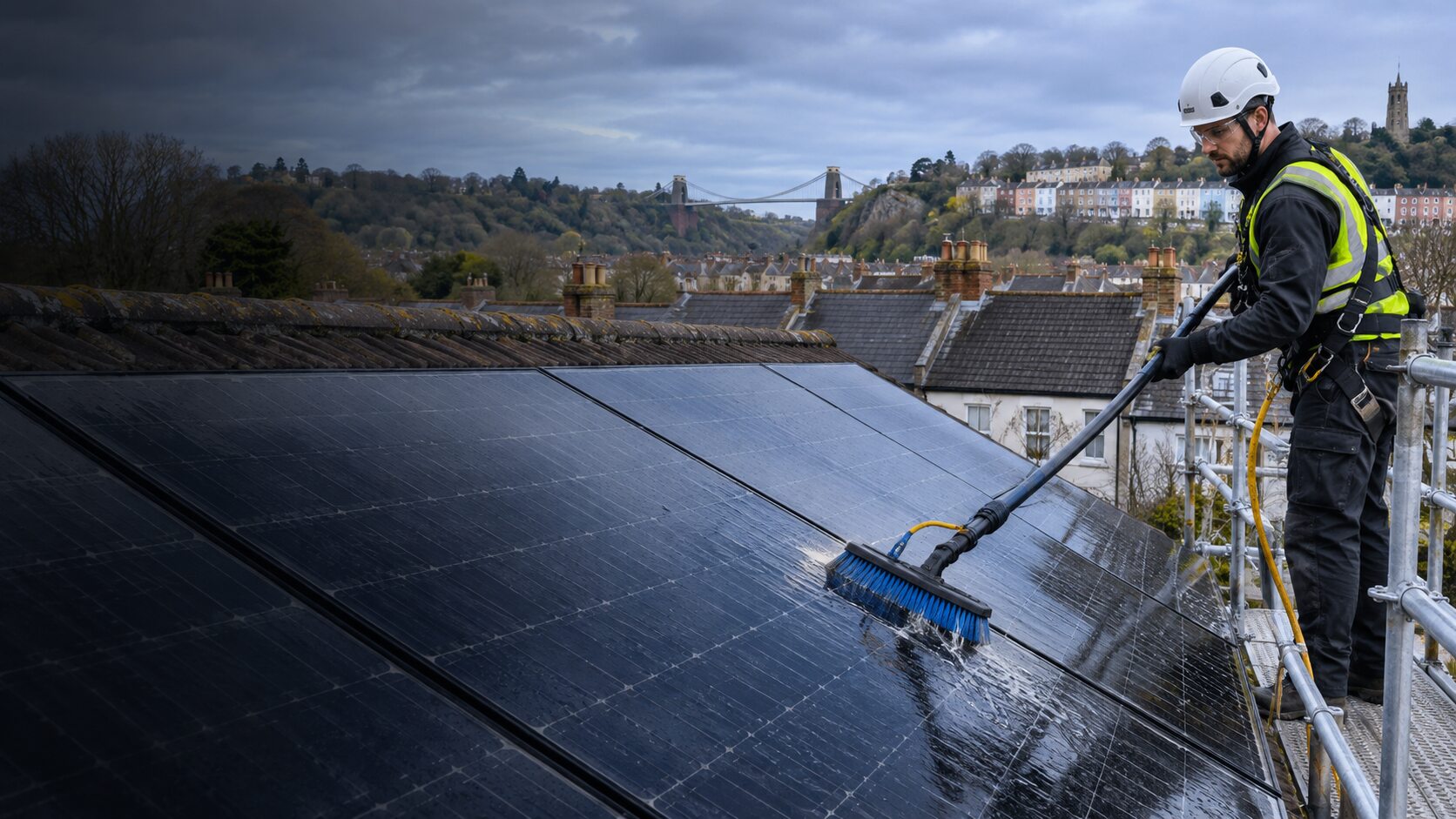
Solar panel cleaning in Bristol
Solar panels collect airborne dust, pollen and bird deposits, but cleaning must be planned around the array, the roof and the manufacturer's instructions. Nova Clean discusses solar panel cleaning in Bristol, Filton, Frampton Cotterell, Winterbourne and Pill for domestic and commercial installations. An owner should provide details of the panel system and safe access before any method is proposed. We do not promise a particular energy gain from cleaning because output depends on weather, orientation, equipment condition and many other factors.
Access and electrical considerations first
A rooftop array cannot be treated like a ground-level window. Height, pitch, fragile roof surfaces, cable routes and weather determine the safe approach. We ask whether the installation can be reached from suitable access equipment without walking on panels or disturbing mountings. Electrical faults, damaged glass and loose wiring require the attention of an appropriate specialist. Cleaning is not an electrical inspection, repair or performance certification.
Gentle treatment of glass and frames
Abrasive brushes, unsuitable detergents and excessive pressure can affect coatings, seals or connections. We consider the panel manufacturer's guidance, water quality, temperature and the condition of surrounding roof materials. Deposits concentrated near a pigeon perch may need a more careful assessment than ordinary dust. Rinsing should be controlled so that water does not create hazards below. We will explain any areas that cannot be reached safely and distinguish a visual clean from the removal of permanent surface damage.
Planning for homes and business premises
A house in Winterbourne and a commercial building in Filton can require very different access and scheduling. On a shared roof, the managing party may need to coordinate permissions. For a business, work may need to avoid deliveries, occupied areas or equipment operation. We ask for photographs taken from a safe position, the number of panels, the installation height and any relevant maintenance instructions. The resulting quotation should specify the accessible array and cleaning method.
To discuss an installation in Greater Bristol, call 0845 52 805 20 or email
Decide whether cleaning is necessary
Panels exposed to ordinary rain may not need frequent intervention. The owner may have noticed a concentrated deposit from birds, construction dust after nearby work or an accessible array that has become visibly soiled. A fall in recorded output can have many causes, including weather, shading, inverter issues and changes in use, so cleaning should not be presented as a diagnosis. We ask what prompted the enquiry and whether the owner has maintenance records or manufacturer guidance. A visual clean may be sensible for a specific deposit, but it cannot promise a particular increase in generation.
Photographs taken from the ground or another safe position help show the number of modules, their orientation and the type of soiling. Do not climb a ladder or roof for the sake of a cleaning quote. The installation documents, if available, may identify the module manufacturer and any cleaning restrictions. We ask whether panels are on a pitched roof, a flat commercial roof or ground-mounted frames, and what lies below the work area. The access plan is often more significant than the visible dirt.
Roof safety and fragile surfaces
Working close to an array can involve edges, roof lights, fragile coverings and cables. We consider how a technician can reach the modules without walking on them or disturbing the mounting system. A ladder used to reach a roof does not automatically create a safe position for cleaning all modules. Some installations may require a platform, scaffold or other suitable arrangement. If safe access cannot be provided, the work should be deferred or redesigned. The client should know whether access equipment is included in the quotation.
Weather also matters. Wind and wet surfaces can change the risk of work at height, while strong sun can heat glass and affect the chosen method. We discuss a suitable time and may need to change it if conditions become unsafe. A commercial building around Filton can require induction, roof permits and coordination with maintenance staff. A domestic property in Winterbourne may have a steep roof and conservatory below. We plan for the actual roof and location rather than assume a standard visit.
Electrical equipment and damaged modules
Photovoltaic modules and their connections are electrical equipment. We do not treat visible dirt as permission to handle cables, connectors or inverter components. If a panel is cracked, a connector is exposed or wiring appears loose, the owner should arrange assessment by a competent solar specialist. Cleaning is not a substitute for electrical testing, fault finding or repair. The cleaning scope should say which surfaces are included and where work would stop if damage is discovered.
Manufacturer instructions may limit products, tools or water application. We ask for them where possible and avoid assuming that all arrays share the same specification. A soft approach suited to the glass and its coating can reduce the risk of scratching. Aggressive pressure or abrasive materials can damage a module or its seals. Frames and junction areas need care. We discuss these limits before work rather than promise a fast wash irrespective of the installation.
Water quality and surface finish
Water can leave mineral marks as it dries, particularly in warm conditions. The choice of water and rinsing method should be considered alongside the manufacturer guidance and the site conditions. Detergents should not be chosen solely because they remove ordinary window dirt. Residues, runoff and nearby roofing materials must be taken into account. We explain the method proposed for the array and can discuss a small test if the surface or deposit is unusual. The aim is to remove suitable soil without changing the module or its supporting details.
Bird deposits can be more stubborn than ordinary dust. A concentrated patch may require careful softening and removal rather than hard scraping. If birds continue to perch above the array, the deposit may return. Cleaning does not solve that cause. A separate maintenance or bird management decision may be needed. We avoid claiming that every mark can be removed from a panel that has been etched, scratched or damaged previously. The final result should be assessed against the condition documented before cleaning.
Runoff and the property below
Water leaving a rooftop array can carry loosened material toward gutters, lower roofs, gardens and pedestrian areas. We ask where runoff will go and whether any drainage point is blocked. On a shared building, a neighbour or tenant may need notice. A panel array above a public path can require a controlled work area. The owner should identify parked vehicles, outdoor furniture and sensitive planting beneath the work. These are practical elements of the quotation, not minor details to discover after arrival.
If the roof itself has moss, loose tiles or a leak, a roofing assessment may be needed. Panel cleaning should not be used to disguise a defective covering. We distinguish work on module glass from cleaning the surrounding roof, gutters or bird fouling elsewhere. Each has different access, material and waste questions. If several services are requested together, the proposal should list them separately and explain the sequence.
Domestic arrays across Greater Bristol
A household in Redland, Bedminster or St George may have panels on a narrow terrace with limited side access. Clifton properties can have varied roof forms and neighbouring buildings close by. Frampton Cotterell and Winterbourne homes may have larger ground space yet steep pitches or garden structures under the array. Pill can present a different approach to parking and access. We ask about the address, roof height, module position and ground conditions before deciding whether the proposed method is practical.
For a domestic enquiry, tell us how many panels are installed, whether they are reachable from existing safe access, when they were fitted and what deposit concerns you. Mention roof windows, dormers and any recent repair. If you have a warranty or maintenance document, check its cleaning instructions. We can discuss whether an inspection is needed. The owner should not disconnect equipment or attempt to clean an inaccessible rooftop array while waiting for a quotation.
Commercial roofs and larger installations
A larger array may extend across several roof sections, each with different access and drainage. A facilities manager should identify the operator's working hours, roof access rules and the person who can authorise the method. Panels above loading bays or staff entrances may require planned exclusion zones. Cable trays and roof plant may limit the route. We can propose sections or phases so the method and result can be reviewed before the whole installation is treated.
Commercial owners often track output, but a cleaning contractor should not infer a guaranteed financial return from those records. The weather, seasonal daylight and system condition affect performance. A proposal can describe the observable soiling, the modules included and the cleaning method. If the owner suspects an electrical fault, that should be assessed separately by a suitable specialist. Clear boundaries prevent the cleaning visit from being mistaken for a system service or performance certification.
Questions for a transparent quotation
Ask which modules are included, how they will be reached, whether the price includes access equipment and what water or products are proposed. Confirm whether bird deposits, frames, surrounding gutters or roof cleaning are included or excluded. Ask what happens if a cracked panel, loose cable or fragile roof area is found. The quotation should identify assumptions about utilities, parking, permissions and weather. If photographs do not establish safe access, a survey may be needed before a firm price.
Agree how the result will be reviewed. A visual clean can be documented in photographs from a safe position, but it does not verify electrical output or hidden connections. There may be permanent marks or inaccessible edges. The client should know these limitations before work begins. If access is restricted, it is better to describe the untreated modules than to imply that the entire installation has been cleaned.
Maintaining the installation
After cleaning, the owner can continue to monitor the system through its normal records and follow manufacturer maintenance guidance. If recurring bird deposits are the main problem, address the source through a separate suitable arrangement. If gutters have been blocked or roof materials appear damaged, arrange appropriate maintenance. The cleaning frequency should reflect actual soiling, access cost and the installation's instructions, rather than a universal timetable. A well-documented clean can help the owner decide when another visit is genuinely useful.
Send safe photographs, the address, number of panels, roof details and any available maintenance instructions to Nova Clean Bristol. We discuss work across Bristol, Filton, Frampton Cotterell, Winterbourne and Pill. Call 0845 52 805 20 or email
When several issues appear together
A property owner may request solar panel cleaning because the surrounding roof looks neglected. It helps to inspect these concerns separately. Moss on tiles, debris in gutters and deposits on module glass call for different decisions, even when they occupy the same elevation. A combined visit may be possible if access is suitable, but each task should be described in the quotation. The team should not brush debris from a roof onto panels or use a method chosen for tiles on the module glass. A staged sequence can protect the array and make the result easier to review.
Likewise, a commercial system can have one heavily soiled row near a bird perch and many relatively clean rows. The owner may choose targeted work after considering access and cost. We can discuss that option without promising an output increase. The aim is to make an informed maintenance decision based on observable deposits and safe access. If the client needs a report on system performance, a solar technician or engineer is the appropriate person to investigate. Keeping those roles distinct avoids spending on repeated cleaning when an equipment fault is the real concern.
Before booking, confirm who will make roof access available and whether any tenant, managing agent or facilities team must approve the visit. This small administrative step can prevent delays and ensure the work takes place within the conditions agreed for the building.